Wow. Picking just one trending paper to write about was harder than I thought. There are so many interesting things being published right now, but I ultimately have decided to write about Alzheimer’s Disease.
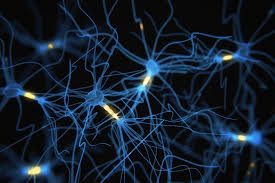
Neurons are the special cells that make up our brain. Connections between these brain cells are what allow us to have memories, perform tasks, and essentially do everything. Our brains have a high plasticity. Basically our brain is like a muscle. If you work it out with brain puzzles, education, etc., you will be able to make your brain stronger and smarter, even as you age. As we age, some of these neurons will degenerate and some of the connections will basically die. This is why you have better memory when you’re younger, but start to lose your memory as you get older. A little forgetfulness as you age is pretty common and not something to worry about too much and can be mitigated by working out your brain; however, sometimes even a brain workout can’t help memory loss.
Alzheimer’s disease is a disease characterized by a severe change in cognitive and behavioral functions. A person will suffer severe memory loss, confusion, mood swings, and more. This is because the neurons in the brain are being degraded and are dying. When a brain cell dies and can’t continue on it’s connections, pathways for memories and other cognitive functions go away and can’t be rebuilt with brain plasticity even if a person tried. While we aren’t exactly sure why neurons are dying, we have some educated guesses. In one of the main theories, amyloid-beta plaques build-up and cause the neuron to die. Amyloid-beta plaques are a clump of protein that basically builds up around the neuron and cuts it off from resources to survive and prevents it from continuing to send signals to the brain cells around it. Without knowing the exact cause of Alzheimer’s, we can’t create a treatment that prevents or cures the disease.
In a paper just published from Rutgers, titled “Oxidation of KCNB1 channels in the human brain and in mouse model of Alzheimer’s disease,” the authors offer up a new theory of what causes Alzheimer’s. As I briefly mentioned, neurons communicate with each other by sending signals. These signals are both electrical and chemical. Electrical signals are sent when there is a change in the charge of the membrane. Basically, the inside of the cell becomes very positive/negative. In this paper, the authors found that a potassium channel, KCNB1, builds up in the brains of those affected by Alzheimer’s. A potassium channel changes charge with the influx or output of potassium (positive) charge. This build-up becomes toxic, because it creates free radicals through oxidation. Oxidation is the loss of electrons and disrupts chemical processes in our bodies, for this reason we are encouraged to take supplements or eat food with antioxidants. This promotes the amyloid-beta plaque build-up which causes Alzheimer’s. The paper ended by discussing how a drug used to treat leukemia in human patients has successfully worked on mice expressing Alzheimer’s. The next step is to put this drug into a human clinical trial to see if the drug works in reducing Alzheimer’s in humans by preventing this KCNB1 mechanism.
Today’s Takeaway: Scientists are constantly finding new possible root causes of disease and attempting to find treatments for those causes. We can’t prevent Alzheimer’s yet, but constantly “exercising your brain” with brain games, education, even just reading something new (like this blog post!) will help your neurons create even more connections so that if one fails as we get old, there are alternative pathways to still access the information. Additionally, eating foods high in antioxidants, such as blueberries, is always helpful for your health.
Today has been busy, and I’m still getting the hang of blogging, but I’m hoping to dig a little deeper and explain the science in the methods, stats, and results in future papers. Thanks for learning with me!
Reference:
Wei, Y., Shin, M. R., & Sesti, F. (n.d.). Oxidation of KCNB1 channels in the human brain and in mouse model of Alzheimer’s disease. https://doi.org/10.1038/s41419-018-0886-1
 Perpetual Science